

Not every business has the luxury of a huge office, and with space often coming at a premium, making the most of what you have is more important than ever.
The good news? A smaller workspace doesn’t have to mean compromising on creativity, collaboration or style. With a little thoughtful planning, even the most compact office can become a practical, welcoming place where people enjoy working.
From clever storage to flexible furniture and smarter wall space, here are some ways to make a small office work harder.
1. Make Every Square Metre Count
When space is limited, every design decision matters. Before adding new furniture or equipment, take a step back and look at how the office is actually used.
Are there desks that rarely get used? Is a meeting table taking up valuable floor space when it could be used for several purposes? Are walkways clear, or are people constantly moving around furniture?
Start with how your team works day to day. Understanding which activities need dedicated space, and which can share it, will help you create a layout that feels considered rather than cramped.
Sometimes, the biggest improvement comes from removing something rather than adding something new.
2. Choose Furniture That Works Harder
In a smaller office, furniture needs to earn its place.
Consider desks with integrated storage, mobile pedestals that can be moved when needed, or tables that can be rearranged for different activities. Furniture on castors can be particularly useful when a space needs to switch between individual work, team meetings and collaborative sessions.
Avoid filling every available corner simply because there’s room for another chair or cabinet. Leaving some open floor space can make a room feel noticeably bigger and easier to move around.
The aim is to create a flexible workspace that adapts to your team, rather than one that dictates how everyone has to work.
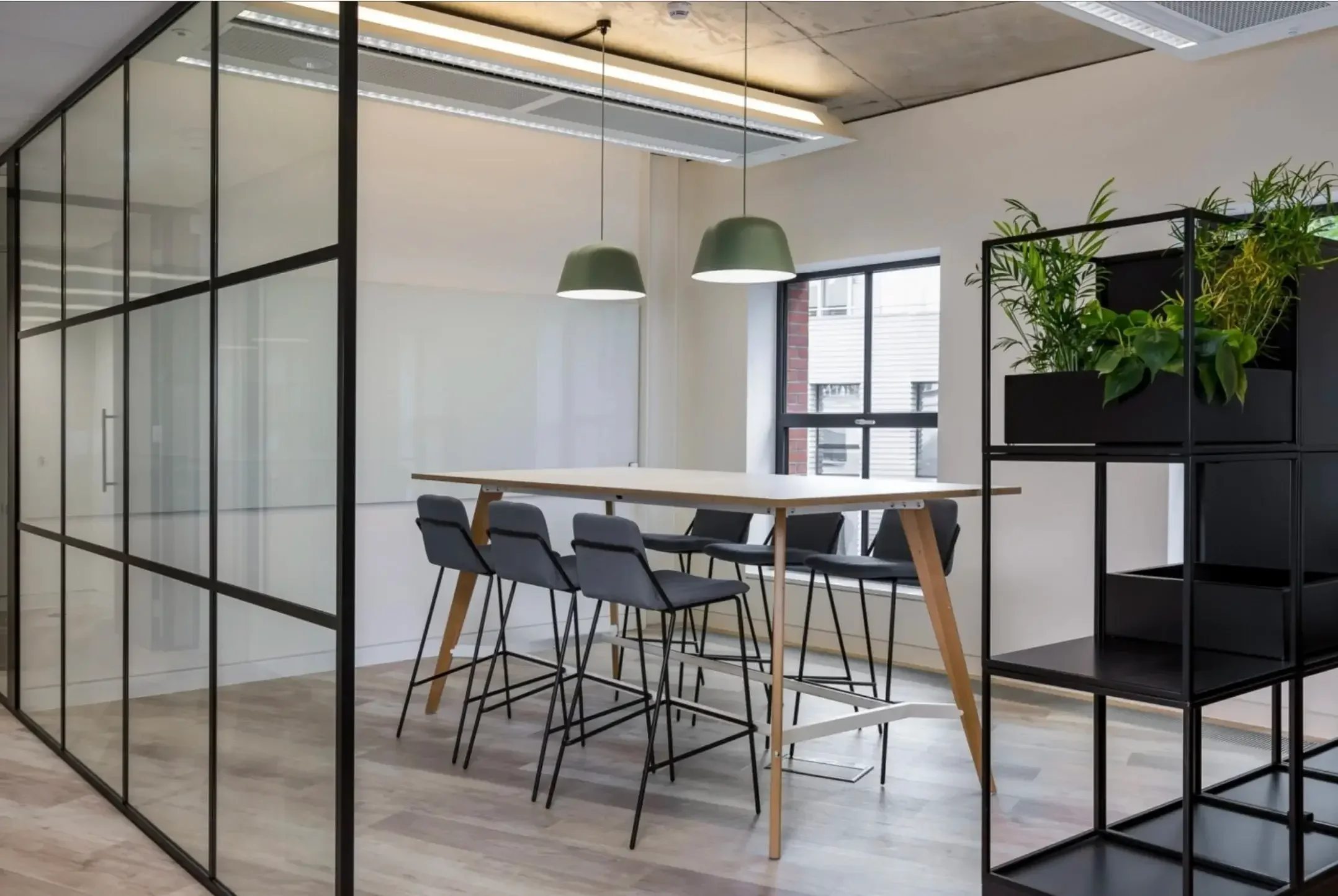
3. Make Better Use of Your Walls
When floor space is limited, look upwards.
Walls can do far more than display artwork or hold a clock. Shelving, wall-mounted storage, pinboards and writing surfaces can all help keep essential items accessible without taking up valuable floor space.
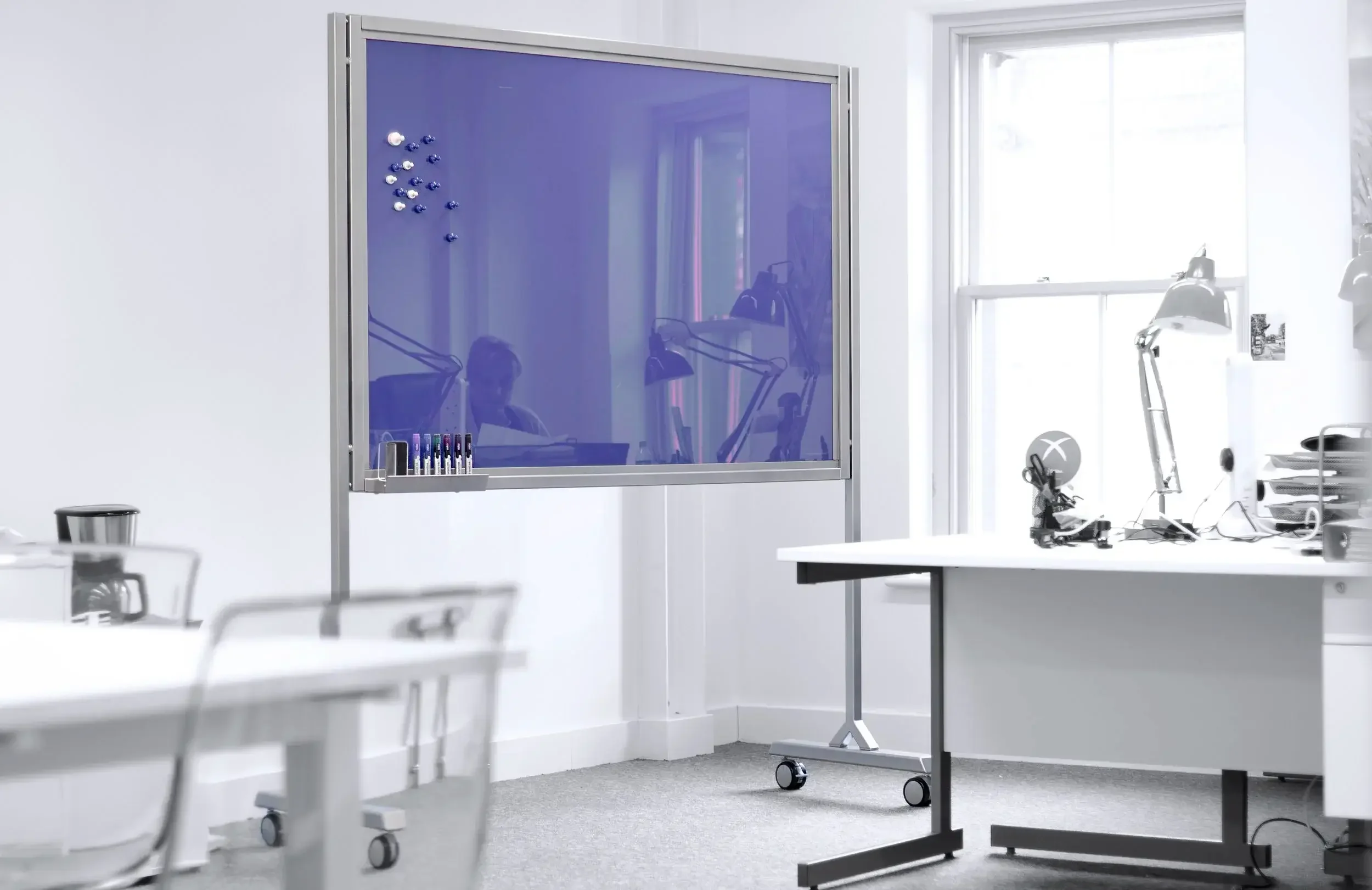
Glass whiteboards are particularly useful in compact offices. They provide a dedicated surface for brainstorming, planning and sharing information without requiring an additional freestanding board or bulky piece of furniture.
A wall-mounted glass whiteboard can also help keep desks clear, giving teams somewhere to work through ideas without covering every available surface in notes and paperwork.
For a clean, contemporary finish, frameless glass whiteboards with hidden fixings sit neatly against the wall. Magnetic options offer additional flexibility, allowing teams to display documents and notes alongside their writing.
It’s a simple way to turn an otherwise unused wall into a genuinely useful part of the workspace.
4. Use Colour and Light to Open Up the Space
A small office doesn’t automatically need to be painted white from floor to ceiling. In fact, a carefully chosen colour scheme can give a compact workspace plenty of personality without making it feel crowded.
Lighter colours can help reflect natural light, while a consistent palette across walls, furniture and finishes can create a sense of flow. If you want to introduce stronger colours, consider using them in selected areas rather than competing across every surface.
Lighting matters just as much. Make the most of natural daylight where possible, avoid blocking windows with tall furniture, and use well-positioned artificial lighting to keep work areas bright and comfortable.
Reflective surfaces can also influence how light moves around a room, although their suitability will depend on the position of windows and lighting. In brighter spaces, matt finishes can help minimise distracting reflections.
The goal is to make the office feel open and comfortable, without losing the character that makes it your own.
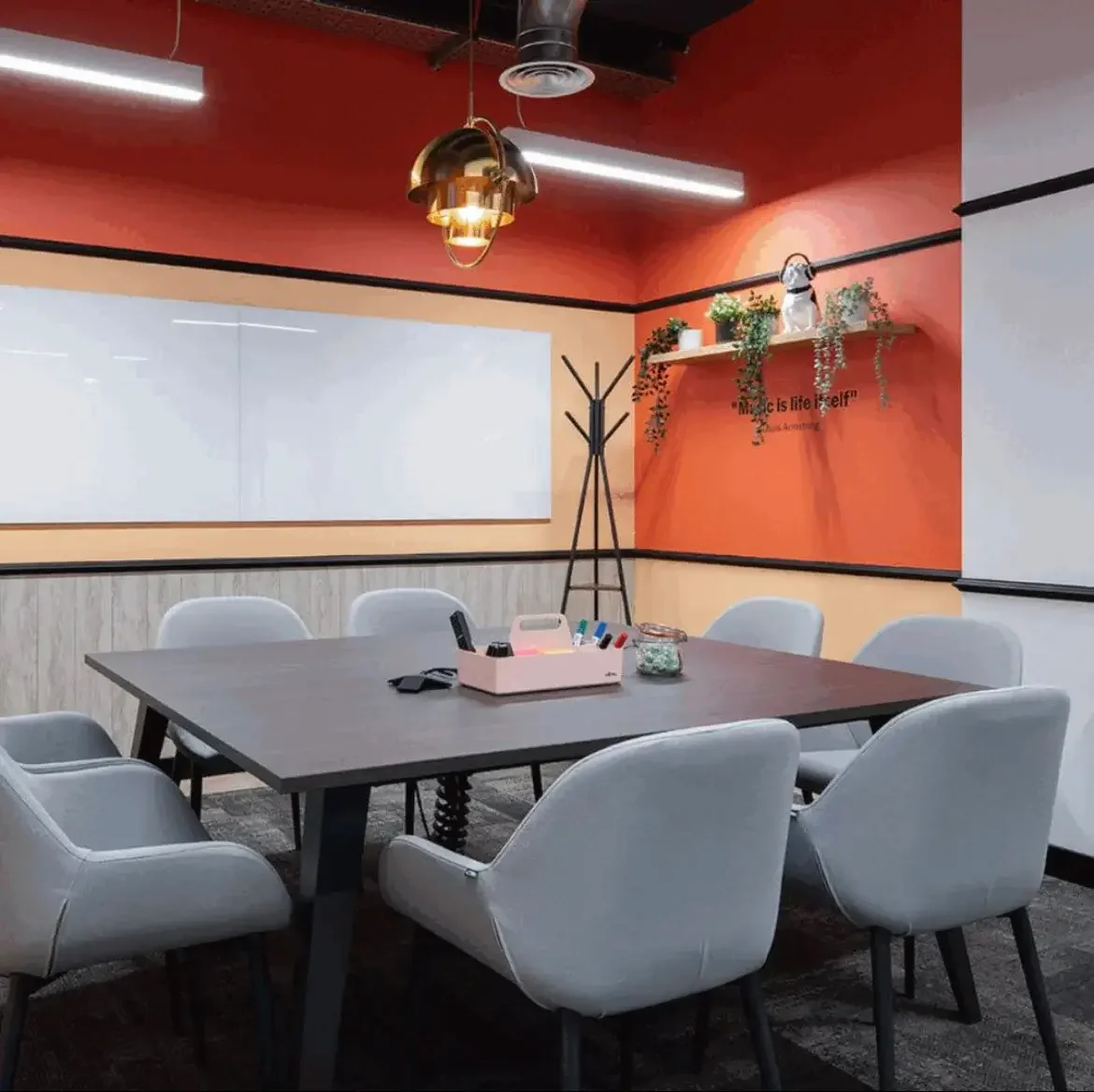
5. Create Zones Without Building Walls
Open-plan offices can be particularly useful when space is tight, but one large, undefined room can quickly become noisy or difficult to navigate.
Rather than adding permanent partitions, think about creating subtle zones for different activities.
A compact meeting area might be defined by a small table and a change in lighting. A collaborative space could use mobile furniture and a wall-mounted whiteboard. Quieter individual work areas might be positioned away from the busiest parts of the office.
The trick is to give each area a clear purpose without making the overall space feel divided or boxed in.
Glass can be useful here, too. Its clean appearance can complement a contemporary office design without adding the visual weight of bulky furniture or heavy finishes.
6. Keep Clutter Under Control
Even a well-designed office can feel cramped when surfaces are covered in paperwork, spare stationery and abandoned coffee cups.
Good storage is essential, but so is making it easy for people to put things away. Closed storage can help keep visual clutter to a minimum, while labelled cupboards and designated spaces make shared resources easier to find.
Think carefully about what needs to stay on desks and what can be stored elsewhere. In collaborative areas, keep frequently used items accessible but avoid allowing every surface to become a permanent storage spot.
This is another reason to make good use of walls. Moving planning tools, notes and reference materials onto a dedicated writing surface can free up desks for the work they’re actually intended for.
7. Don't Forget How the Office Feels
Making a small office more efficient is important, but it shouldn’t come at the expense of how people feel when they’re there.
Plants, artwork, comfortable seating and thoughtful colour choices can all help create a more welcoming environment. Acoustic considerations are important, too, particularly where several people are working or meeting in the same room.
Think about the small details that make a workspace feel cared for. Good lighting, clear surfaces, comfortable furniture and a layout that makes sense can have a bigger impact than simply adding more equipment.
A compact office can still feel considered, inspiring and distinctly your own.
Small Space, Plenty of Potential
Making the most of a smaller office isn’t about squeezing as much furniture as possible into the available space. It’s about understanding how your team works and making thoughtful choices that support it.
Flexible furniture, clever storage, well-planned lighting and better use of wall space can all help create a workspace that feels bigger, works harder and looks great.
At The Glass Whiteboard Collective, we design glass whiteboards that combine everyday practicality with a clean, contemporary finish. With a range of sizes, colours and finishes available, they can help turn unused wall space into a useful place for ideas, planning and collaboration.
Working with a smaller office? Explore our glass whiteboards to find a solution that complements your space and the way your team works.